
Most homeowners skim a house cleaning contract, sign it, and only read the fine print after something goes wrong. A surprise charge for tasks you never agreed to, a damage claim with no written process, a provider who cancels with no remedy for you: all of these trace back to clauses that were there to read before you signed.
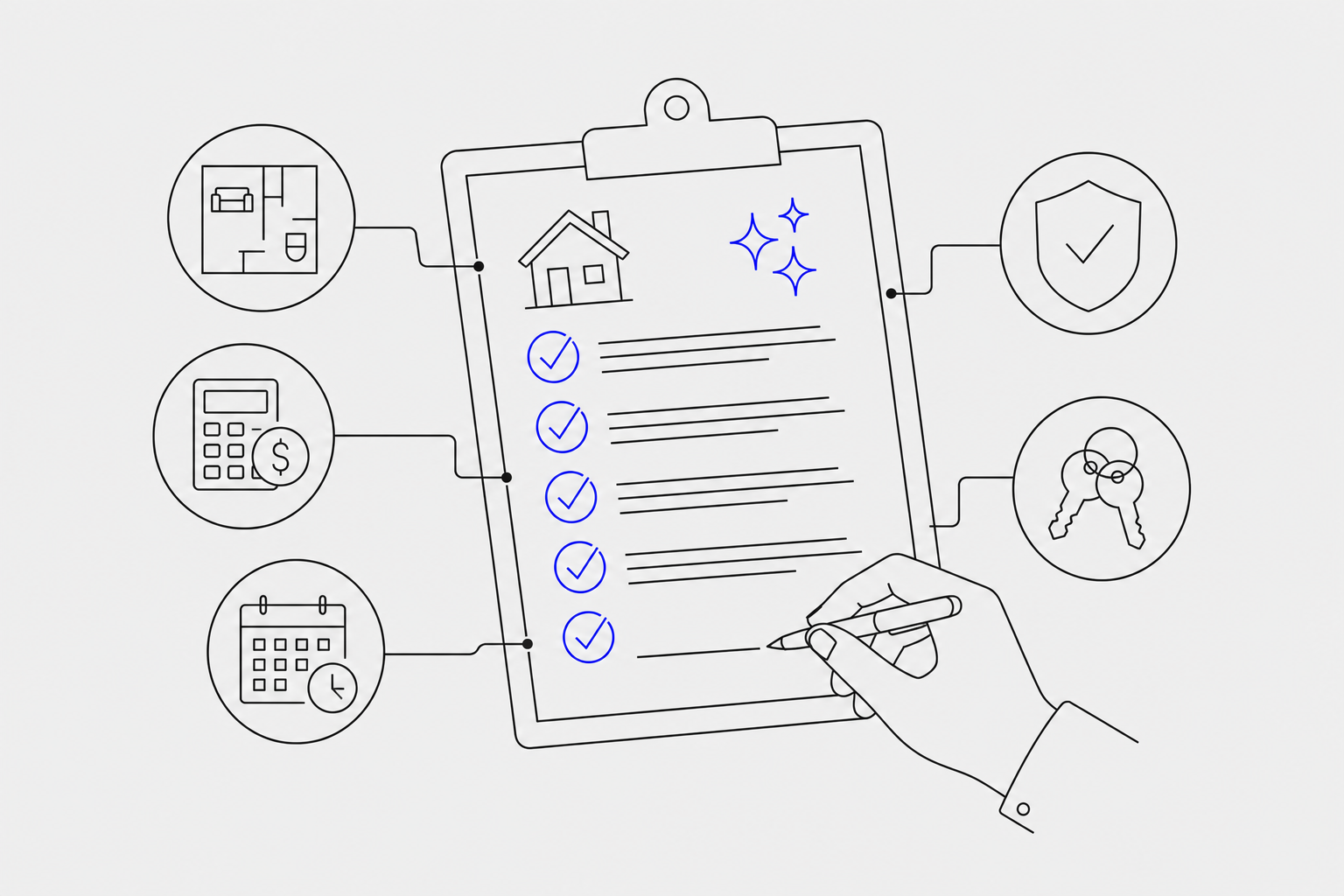
This guide walks through the five areas that matter most in any house cleaning contract: scope of work, pricing model, cancellation terms, insurance requirements, and access protocols. Each section explains what the clause covers and what to watch for.
What Should a House Cleaning Contract Include?
Every solid cleaning contract covers five core areas. Miss any one of them and you leave yourself open to a dispute that is hard to resolve without written proof.
Here is what every contract must include before you sign:
- Parties and scope of work. Full legal names for both you and the provider, plus a room-by-room task list that leaves no ambiguity about what gets cleaned.
- Pricing model. Whether the contract uses flat-fee, hourly, or square-footage pricing, and what triggers any additional charges.
- Cancellation and rescheduling terms. The notice window required, any late fees, and what happens when the provider cancels on you.
- Insurance and liability coverage. Proof that the provider carries general liability and workers' compensation, and what the process is if something is damaged.
- Access and security protocols. How keys or lockbox codes are handled, alarm instructions, and any pet-specific requirements.
The sections below walk through each of these in order.
Step 1: Confirm the Parties and the Scope of Work
The first thing to check in any cleaning contract is who, exactly, is named in it. A vague or incomplete scope of work is the most common source of disputes between homeowners and cleaning providers.
Follow these steps before you move past the first page:
-
Identify the legal names and contact details for both parties. The contract should list your full legal name and address alongside the provider's registered business name, not just a first name or a brand handle. If the provider operates as an LLC or corporation, that entity name belongs in the contract.
-
Define a room-by-room scope of work. A task list that says "clean kitchen and bathrooms" is not a scope of work. A real scope names specific tasks: wipe down cabinet fronts, scrub the toilet bowl, clean inside the microwave, vacuum under couch cushions. Go room by room. Kitchens, bathrooms, bedrooms, and living areas each need their own task list.
-
Flag what is excluded. Good contracts list what the service does not cover as clearly as what it does. Dishes in the sink, laundry, interior oven cleaning, and ceiling fans in a Buckhead home are common exclusions that catch homeowners off guard when they are not written down.
-
Check for add-on language. Some contracts allow the provider to charge extra for tasks not on the base list. If add-ons are possible, the contract should name them and their cost upfront, not leave them to a verbal agreement on the day of service.
A specific, written scope protects both sides. If a task is not on the list, you cannot reasonably expect it to be done. If it is on the list and it gets skipped, you have written grounds to request a re-clean or a credit. Without that list, the conversation becomes your word against theirs.
One practical tip: walk through your home before signing and note any problem areas, like grout staining in a Sandy Springs bathroom or a built-in shelf unit that needs dusting. Ask the provider to add those specifically. A provider who resists that level of detail is telling you something.
Step 2: What Pricing Model Is the Contract Using?
Cleaning contracts use three main pricing structures. Knowing which one your contract uses, and what risks each carries, saves you from a bill that looks nothing like the estimate.
Flat-fee pricing charges a fixed amount per visit regardless of how long the job takes. This model is predictable. You know the cost before the cleaner arrives, and there is no incentive for the provider to slow down. The risk is that a flat fee may come with a narrower scope, so confirm the task list is detailed enough to cover what you actually need.
Hourly pricing charges by the hour, often with a minimum. According to Thumbtack's 2026 report, house cleaners in the U.S. charge an average of $40 to $55 per hour. That rate can add up quickly in a larger home, and without a cap written into the contract, a three-hour estimate can turn into a five-hour bill. If your contract uses hourly pricing, ask for a not-to-exceed clause.
Square-footage pricing sets the rate based on the size of your home. This model works well for initial or deep cleans but can feel imprecise for recurring visits where the actual work varies room by room. Check whether the contract uses finished square footage or total square footage, since the difference matters in homes with basements or unfinished areas.
One-time visits using any of these models tend to run between $174 and $256 on average, according to Thumbtack's 2026 data, which puts the typical single-visit cost in that range regardless of pricing model. For context on how those figures compare across service types, the guide to house cleaning prices in 2026 breaks down cost ranges by home size and visit frequency.
Whatever model the contract uses, look for a clear payment schedule: when payment is due, what forms are accepted, and whether there are late fees. A contract that is vague on payment terms is a contract that is easy to dispute.
Step 3: Check the Cancellation and Rescheduling Terms
Cancellation terms are where most homeowners get surprised. The clause looks minor until you need to use it.
Work through these points before you sign:
-
Establish a cancellation window. Most contracts require 24 to 48 hours notice before a scheduled visit. Anything shorter than 24 hours is worth pushing back on. If you cancel inside the window, the contract should state the exact fee, whether that is a flat charge or a percentage of the visit cost.
-
Check what counts as a late cancellation. Some contracts define cancellation and rescheduling differently. Rescheduling within the same week may carry no fee, while canceling outright might. Read both definitions carefully so you know which situation triggers a charge.
-
Look for a provider cancellation clause. This is the part most homeowners forget to check. If the cleaning company cancels on you, the contract should spell out what happens next: a rescheduled visit within a set number of days, a credit, or some other remedy. A contract that protects the provider from fees but says nothing about your recourse when they cancel is not balanced.
-
Find the terms for ending the agreement entirely. Recurring service contracts typically require written notice to terminate, often 30 days out. Confirm the notice period, the method required (email, written letter, or an online portal), and whether there is any early termination fee if you are locked into a minimum number of visits.
-
Ask about hold options. Some providers allow you to pause service for travel or renovation without penalty. If that matters to you, get it written in before you sign, not after.
Balanced cancellation terms protect both sides. If the clause only penalizes you, that is a signal to negotiate or walk away.
Step 4: Does the Contract Cover Insurance and Liability?
A cleaning provider without insurance is a liability risk you absorb the moment they walk through your door. This section of the contract is not optional, and verifying it takes less than ten minutes.
Two types of coverage matter here. General liability insurance covers property damage and bodily injury that occur during a cleaning visit. If a cleaner breaks a window in your Decatur home or slips and falls on a wet floor, general liability is what pays. Ask for a certificate of insurance, not just a verbal confirmation. A legitimate provider can produce one quickly.
Workers' compensation covers the cleaner if they are injured while working in your home. Without it, you may face a claim against your homeowner's insurance, or in some states, direct personal liability. This is especially relevant when you hire an individual cleaner rather than a company, because independent contractors are often not covered by workers' comp.
That distinction matters more broadly. When a cleaning company employs its cleaners directly, the company handles payroll taxes, benefits, and insurance. When a provider sends independent contractors, the legal and financial exposure shifts. Your contract should make clear which arrangement you are entering. If the provider calls their workers contractors but controls their schedule, equipment, and methods, the classification may not hold up. Cover this in general terms with your provider; do not rely on the contract alone to sort out worker classification questions.
For a broader look at what a professional cleaning arrangement should include before the first visit, the guide on what to expect from a professional cleaning service covers the full picture.
Once you have verified coverage, note the provider's insurer name and policy number in your own records. If a claim ever arises, you will want that information without having to track down the contract again.
Step 5: Review the Access, Security, and Pet Protocols
Access and security terms are easy to overlook because they feel administrative. In practice, they are some of the most important clauses in the contract.
Work through these steps before the first visit:
-
Document specific access protocols. The contract should state exactly how the provider enters your home: a lockbox code, a key on file, or a keypad entry. If a lockbox is used, the code should be stored securely by the provider, not written on a shared calendar or a paper note. Ask how the code is stored and who has access to it.
-
Include alarm instructions in writing. If your home has a security system, the contract should document the entry and exit codes, the disarm sequence, and what the provider does if the alarm triggers. A verbal walkthrough is not enough. Written instructions protect you if there is a false alarm or a monitoring fee.
-
Handle key management explicitly. If the provider holds a physical key, the contract should state how it is labeled (never with your address), where it is stored between visits, and the process if it is lost. Some companies use key fobs or coded lockboxes to avoid this issue entirely.
-
Create a persistent pet protocol. The contract should note which pets are in the home, where they are secured during cleaning, and any products the provider should avoid. A dog in an Alpharetta home that gets anxious around strangers needs a different protocol than a cat that hides. If you use specific non-toxic products, name them. This clause protects your pet and limits the provider's liability if an animal reacts to a cleaning product.
Written access terms give both sides a clear record. If a key goes missing or an alarm gets triggered, you resolve it from the contract, not from memory.
How Do Move-Out Contracts Differ from Standard Cleaning Agreements?
Move-out cleaning contracts are built around a different standard than recurring service agreements. The goal shifts from maintenance to restoration, and the contract terms reflect that.
A standard contract defines routine tasks: wipe counters, vacuum, mop. A move-out contract is built around a checklist tied to a completion standard, often "broom clean" or "landlord ready." Every surface, appliance interior, and cabinet shelf is typically in scope. If you are using the clean to recover a security deposit, the contract should name that standard explicitly so both sides agree on what "done" means.
Pricing is higher, and the contract should say why. According to Agiled's 2026 report, deep cleaning or move-out cleaning typically costs 1.5 to 2.5 times the price of a standard visit. That range is wide, so the contract should itemize what drives the higher cost: appliance interiors, baseboards, window tracks, wall scuffs. A vague line item like "deep clean surcharge" is worth pushing back on.
A few other clauses appear in move-out contracts that rarely show up in recurring agreements:
- Completion deadline. Move-out cleans are often tied to a lease end date or a landlord walkthrough. The contract should commit to a specific completion time, not just a date.
- Re-clean or refund terms. If the landlord finds something missed, who covers the return visit? Get this in writing before you sign.
- Access after move-out. Once your furniture is gone, the provider may need different access arrangements. The contract should account for that.
If you want a room-by-room breakdown of what a landlord typically inspects, the move-out cleaning checklist covers each area in detail.
Is a Subscription Cleaning Service a Better Alternative to a One-Off Contract?
One-off contracts put the negotiation work on you every time. You review terms, confirm insurance, and establish scope before each provider relationship. For homeowners who want consistent results without that overhead, a recurring subscription model removes most of that friction.
A subscription model removes most of that renegotiation overhead. The scope, pricing, and access terms are set once, and each visit runs under the same agreement. The contract principles covered in this guide still apply, but you work through them once rather than each time you book. If you are in metro Atlanta and want to compare that approach against a standard one-off agreement, Casovela offers a subscription-based arrangement worth reviewing.
Conclusion
A cleaning contract is only useful if you read it before you sign. The five areas that matter most are scope of work, pricing model, cancellation terms, insurance coverage, and access protocols. Each one protects you from a specific type of dispute, and together they give you a clear record of what was agreed.
Before you sign anything, confirm the task list is room-by-room specific, verify the provider's insurance certificate, and make sure the cancellation terms work in both directions. If you are evaluating a move-out clean, check that the contract names a completion standard and covers what happens if the landlord finds something missed. Those details take twenty minutes to review and can save you a much longer conversation later.
Frequently Asked Questions
How do I get cleaning contracts as a new service provider?
This article is written for homeowners reviewing contracts, not providers writing them. If you are a cleaner starting out, the core elements are the same: scope of work, pricing model, cancellation terms, insurance, and access protocols. Use those five sections as your starting framework. Many cleaning industry associations publish template contracts you can adapt, and a local small business attorney can review the language before you use it with clients.
Can a cleaning contract protect me if something is damaged during a visit?
Yes, but only if the contract and the provider's insurance are both in place. A well-written contract should include a damage reporting process: how quickly you must report the damage, what documentation is required, and how the claim is handled. Without that clause, you are relying on goodwill rather than a written obligation. Pair the contract language with a verified certificate of general liability insurance, and you have a clear path to resolution if something breaks.
What is a standard notice period for ending a recurring cleaning agreement?
Most recurring cleaning contracts require 30 days written notice to terminate the agreement. Some providers ask for notice by a specific method, such as email or a written letter, so check the contract for that detail. If the contract includes a minimum commitment period, early termination may carry a fee. Read that clause before you sign, not when you are ready to cancel.
Do I need a separate contract for each cleaning visit, or does one agreement cover all visits?
One agreement typically covers all visits under a recurring service arrangement. The contract establishes the scope, pricing, and terms for the relationship, and each visit operates under those terms until the agreement is changed or ended. For one-time visits, the contract covers that single appointment. If you book a one-time clean and then decide to set up recurring service, ask the provider to issue a new agreement that reflects the ongoing arrangement.
What is the difference between hiring an employee cleaner and an independent contractor, and why does it matter for my contract?
When a cleaning company employs its cleaners directly, the company handles taxes, insurance, and workers' compensation. When a provider sends independent contractors, those obligations may not be covered the same way, and some of the legal exposure can shift toward you as the homeowner. Your contract should make clear which arrangement applies. If a provider calls their workers contractors but controls their schedule, tools, and methods, the classification may not hold up under scrutiny. Ask the provider directly, and if the answer is unclear, consult a local attorney before signing.
Put your cleaning plan into practice
Ready for professional help? Compare our Atlanta cleaning services and memberships to find the right schedule for your home.
Ready for a professional clean? Book here